
HM20 System Sizing: PV Input, Battery Modules and Critical Loads
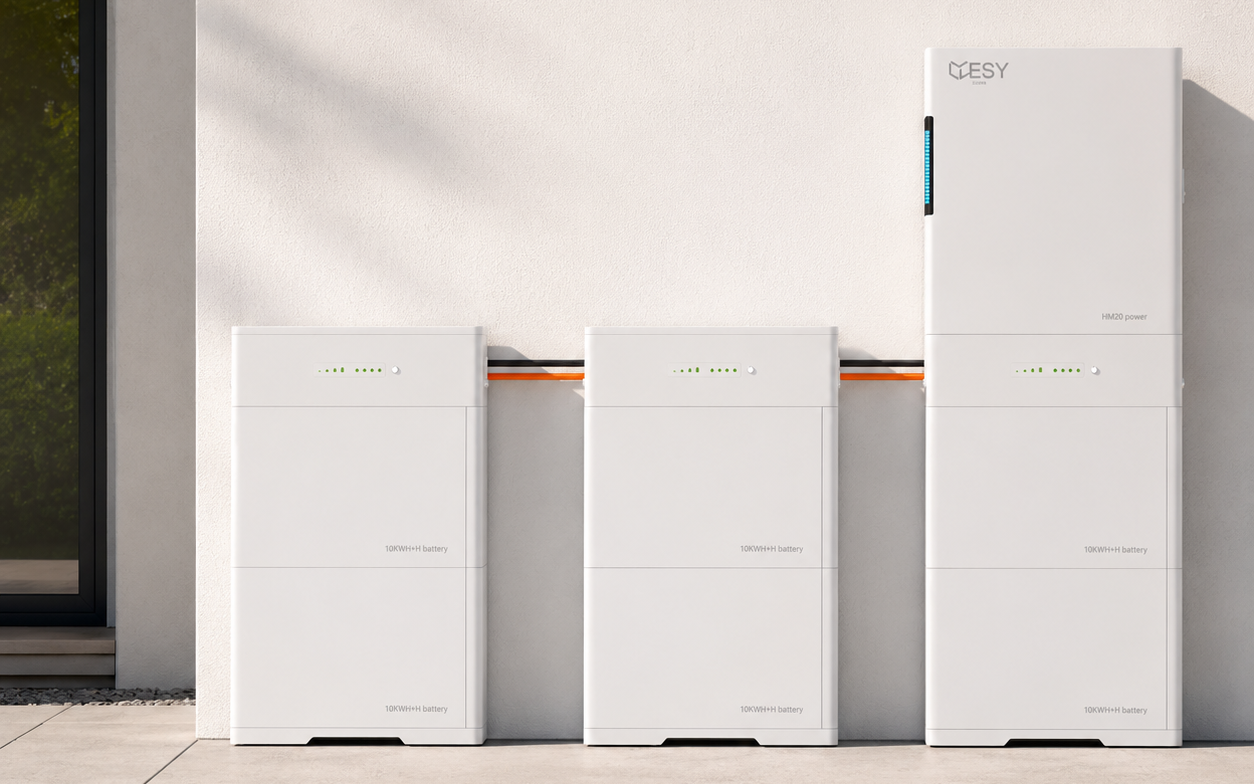
HM20 systems are typically sized by matching PV input, battery capacity, and critical loads. A balanced configuration may include a 25–30kW PV array, 80–150kWh battery storage, and carefully selected backup circuits. For a home using 80kWh/day, a 100kWh battery can provide around 10–12 hours of backup when critical loads average 8–10kW and inverter losses remain below 10%.
PV input sizing determines how much renewable energy the system can collect each day. The HM20 platform is designed for applications where solar generation and storage capacity must work together instead of being selected separately. A common residential design uses PV oversizing because solar output changes throughout the day, with lower production during mornings, evenings, winter months, and cloudy conditions.
A PV array connected to a 20kW-class inverter is often sized between 24kW and 30kW. This approach allows the inverter to reach higher production levels during periods when sunlight is weaker. Many modern solar projects use DC oversizing ratios between 120% and 150%. For example, a 30kW PV array paired with a 20kW inverter can generate more usable energy during 4–5 peak sunlight hours while maintaining inverter operating limits.
| PV Design Parameter | Typical Range |
|---|---|
| Inverter output rating | 20kW |
| PV array size | 24–30kW |
| DC oversizing ratio | 120–150% |
| PV efficiency after losses | 75–85% |
| Annual solar performance review period | 12 months |
The PV capacity also affects battery charging speed. A larger solar array can refill storage faster after overnight use, but battery capacity must be large enough to absorb midday generation. This relationship becomes more important for a high-capacity home energy storage system, where the battery is expected to store solar energy and support longer backup periods.
Battery module sizing starts with the actual energy requirement of protected circuits. A system should not be designed only from total household consumption because many homes continue using non-essential loads during normal operation but disconnect them during outages. Refrigerators, lighting, communication equipment, security systems, water pumps, and selected heating or cooling equipment are usually included in the backup panel.
For example, a property with the following critical loads may require:
| Equipment | Average Power |
|---|---|
| Refrigerator and freezer | 500W |
| Lighting | 800W |
| Internet and security | 150W |
| Water pump | 1500W |
| Essential HVAC | 4000W |
| Other equipment | 1000W |
The average operating demand is approximately 8kW. If the required backup duration is 10 hours, the energy requirement reaches about 80kWh. After considering battery usable capacity, inverter efficiency, and temperature effects, the installed battery capacity may need to increase by 15–25%.
Battery modular design allows capacity expansion according to different site requirements. The HM20 configuration can be adjusted by increasing the number of battery modules rather than replacing the complete system.
| Battery Capacity | Approximate Backup Time at 8kW Load |
|---|---|
| 40kWh | 4–5 hours |
| 80kWh | 9–10 hours |
| 100kWh | 11–12 hours |
| 150kWh | 16–18 hours |
Battery performance also depends on operating conditions. Lithium battery systems are commonly designed around an 80–90% usable energy range to improve service life. Maintaining moderate depth of discharge can reduce long-term capacity loss. Many residential storage systems installed after 2020 are designed for 6,000–10,000 cycle operation depending on chemistry, temperature control, and charging conditions.
The relationship between PV size and battery size affects daily energy management. A battery that is too small may reach full charge before the afternoon solar period ends, limiting solar utilization. A battery that is too large may increase installation cost without providing additional benefits if the available PV generation cannot refill it regularly.
A practical sizing ratio for many residential applications is:
| System Component | Common Design Range |
|---|---|
| PV capacity | 1.2–1.5 times inverter rating |
| Battery energy | 4–8 times inverter power |
| Daily critical load | 30–70% of total household consumption |
| Backup duration | 8–24 hours |
Critical load selection affects inverter operation because electrical demand changes every second. The HM20 inverter must supply both continuous power and short startup surges. Motors, compressors, and pumps often require 2–5 times their normal operating power during startup.
For example, a 2kW well pump may temporarily require 6kW during startup. If several motors start at the same time, the inverter and battery output capability must support the combined surge demand. Proper load scheduling prevents unnecessary stress on the system.
Backup systems are normally designed around measured operating patterns rather than theoretical maximum household consumption.
Three-phase installations require additional planning because power distribution between phases affects system performance. Uneven phase loading may reduce available output capacity and increase electrical losses. Large appliances should be distributed across different phases to maintain balanced operation.
A typical three-phase arrangement may include:
| Phase | Connected Loads |
|---|---|
| Phase A | Lighting, refrigeration, office equipment |
| Phase B | Pumps, workshop equipment |
| Phase C | HVAC and larger appliances |
Monitoring data collected after installation helps refine system operation. Energy management software can record PV production, battery state of charge, load demand, and grid interaction. Systems installed between 2022 and 2025 commonly use remote monitoring platforms that collect thousands of operational data points each year to improve scheduling and maintenance decisions.
The HM20 system design process usually includes several calculation steps:
| Design Step | Main Evaluation |
|---|---|
| 1 | Measure daily electricity consumption |
| 2 | Identify critical loads |
| 3 | Calculate required backup hours |
| 4 | Select battery module quantity |
| 5 | Match PV input with charging requirements |
| 6 | Verify inverter output and surge capability |
Installation location also affects final sizing. A system in an area with 5 peak sun hours per day may require less PV capacity than a system receiving only 3 peak sun hours. Seasonal variation must also be considered because winter solar production can decrease by 30–50% compared with summer conditions in some regions.
A properly configured HM20 system combines PV input, battery modules, and critical loads into one coordinated design. The PV array provides renewable generation, battery modules store energy for later use, and the backup panel defines which equipment remains powered during outages. Accurate sizing improves solar utilization, extends battery operating years, and provides more stable backup performance for residential applications.